
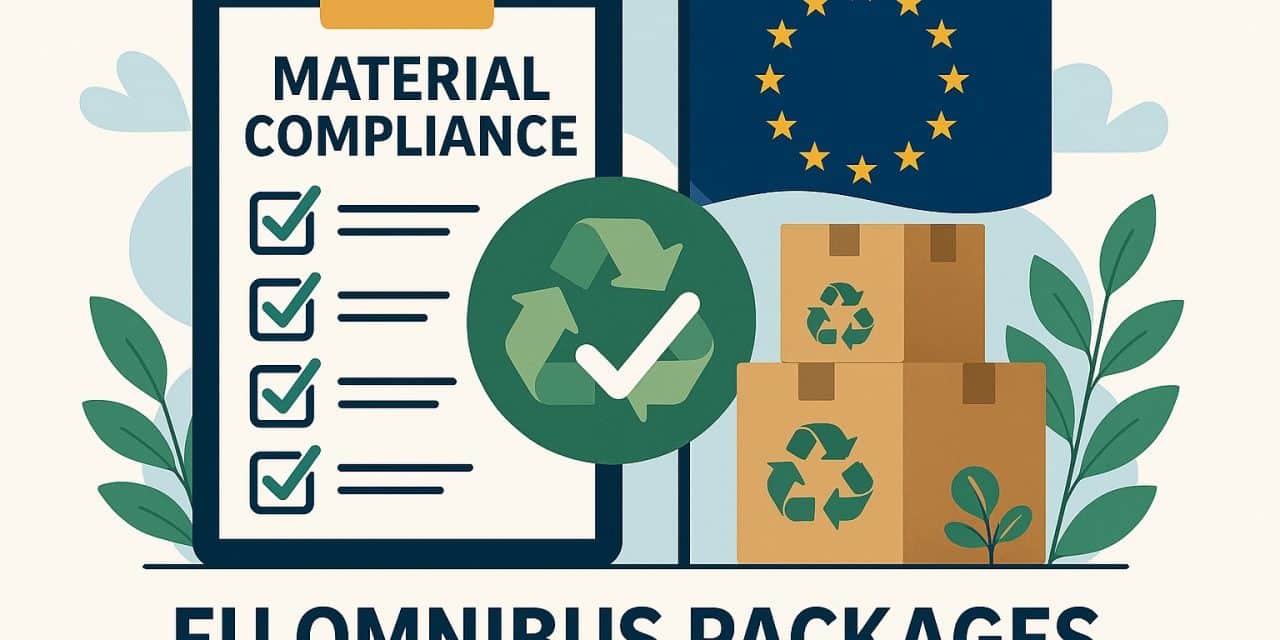
In recent years, the European Union has introduced a wide range of new regulations aimed at improving environmental protection, public health, and consumer safety—while also accelerating the transition toward more sustainable products and supply chains. Although these initiatives are positive overall, they have also resulted in a growing number of standalone requirements, reporting obligations, and documentation processes for companies.
This is precisely where the so‑called Omnibus Packages come in. Their purpose is not to create new rules, but to streamline, align, and clarify existing ones. The overarching goal is to reduce bureaucracy, support digitalization, and ensure that regulations remain both actionable for businesses and transparent for citizens.
What exactly are the Omnibus Packages?
Omnibus Packages are not single, standalone laws. Instead, they are bundled amendments to existing pieces of EU legislation. Multiple regulations may be updated at the same time, especially when they overlap or require similar data.
The core idea is simple:
Data that is collected once—correctly—should be reusable across multiple legal requirements rather than reported repeatedly.
In the field of Material Compliance, this principle is especially relevant, as material- and substance‑related information is currently required in numerous parallel systems and processes.
Key Omnibus Packages with relevance to Material Compliance
- Omnibus Package on Environmental, Chemicals, and Waste Legislation
This package includes changes to the REACH Regulation and the Waste Framework Directive, among others.
A prominent example is the proposal to eliminate the SCIP reporting obligation.
The SCIP database was created to provide waste operators with information on substances of very high concern in articles. In practice, this meant companies had to report the same substance data twice: once under REACH and once in the SCIP system.
Under the Omnibus proposal, this duplication would be removed. Instead of separate SCIP submissions, relevant substance information would be made available through other digital tools—most notably the Digital Product Passport (DPP).
For Material Compliance, this means:
- fewer parallel systems
- fewer duplicate reporting processes
- a stronger focus on high‑quality substance data at the source
- Omnibus Package on Product and Ecodesign Legislation
Closely linked to the new Ecodesign Regulation and the introduction of the Digital Product Passport, this package aims to centralize product‑related information and make it accessible throughout the entire lifecycle.
This includes data on:
- material composition
- hazardous substances
- repairability
- recyclability
For Material Compliance, this represents a shift in perspective:
Substance information is no longer only required for regulatory compliance—it becomes a key data asset for product development, market surveillance, and circular‑economy processes.
- Omnibus Package on Sustainability and Reporting Requirements
Although this package primarily targets corporate reporting rather than product regulation, it still affects material compliance significantly. Substance and material data are increasingly used in sustainability reporting.
The Omnibus amendments aim to:
- clearly distinguish reporting obligations
- reduce duplicate data inquiries
- streamline how companies collect and provide information
Suppliers benefit from fewer urgent one‑off requests; OEMs gain better predictability in their data‑collection processes.
- Omnibus Package on Chemical Legislation (CLP Regulation)
This package focuses on practical adjustments to the Classification, Labelling and Packaging Regulation (CLP), such as:
- clearer labeling rules
- more efficient updates to product labels
- expanded use of digital information
For Material Compliance, this directly affects safety data sheets, product information, and internal approval workflows.
How will the Omnibus Packages be implemented?
Implementation will not happen all at once.
The process follows the usual EU legislative pathway:
- The European Commission publishes a proposal.
- The European Parliament and the Member States negotiate and revise it.
- Once they reach agreement, the changes enter into force.
For businesses, this means that current rules remain valid until the amended versions officially apply. Still, companies should monitor upcoming changes early, as most amendments will include transition periods to allow time for adapting systems and processes—for example, in connection with the Ecodesign Regulation or the Digital Product Passport.
What does this mean for Material Compliance in practice?
The Omnibus Packages bring noticeable changes:
- Short-term relief, as duplicate systems such as SCIP may be reduced or removed
- More digitalization, with growing use of product passports, machine-readable codes, and online data access
- Higher long-term expectations for data quality, consistency, and system readiness
As product‑related information becomes more integrated and more digital, Material Compliance evolves into a central interface connecting engineering, procurement, sustainability, and IT.
Conclusion
The EU’s Omnibus Packages mark a shift in regulatory philosophy:
Away from isolated, redundant obligations—and toward better‑coordinated, digital, and coherent rules.
For Material Compliance, this is not a relaxation but an opportunity. Companies that invest early in clean data structures, clear responsibilities, and robust processes will not only meet legal requirements but also unlock efficiency gains and strengthen transparency across their supply chains.
Company Information
imds professional supports companies in meeting material and product compliance requirements reliably, sustainably, and in full conformity with all applicable regulations. Our core business includes consulting, services, and training related to environmental legislation, regulations, directives, and customer‑specific requirements.
As a leading service provider in the field of Product Environmental Compliance, it is both our mission and our conviction to help organizations optimize their environmental compliance programs in a meaningful and value‑adding way. Through independent, focused consulting and tailored services and training, we enable companies to remain competitive in the face of increasingly complex regulatory obligations.
Since 1999, small and medium‑sized businesses as well as global manufacturing and processing companies have relied on our expertise. For more information, please visit: www.imds-professional.com
foto: imds professional